
Postscript For The Dogs, Part 8: The Godmother and The Dolphin Trainer
Just after closing my business, I lost two mentors. One helped me see that my aversion to artifice may have been my Achilles's heel in business. The other reminded me I had a super power: My writing.

Hi friends — I had promised that Part 8 would be the end of this mini memoir, but it got unwieldy so I broke it into two parts. Watch your inbox for Part 9 (the last part! for real this time!) which I’ll send out next week. If you’re a paid subscriber, you can get it early! See below.
Within 36 hours of announcing that I was closing my business, two people who were important to me died. And no, I didn’t kill them.
The first to go was Louise Fuchs.
I often referred to Louise as my godmother, but only because it was easier than explaining she was my dad’s ex-girlfriend — they were together from my toddlerhood through fourth grade.
I knew she was unwell. Around Christmas, her daughter told me she was experiencing UTI-induced hallucinations: She thought Al Qaeda was spying on her and kept saying I was the only one who could keep them from stealing her savings. At that point, my own sanity was on the brink; I couldn’t take on Al Qaeda.
So, I resolved to address the situation in the New Year. But then, she was gone.
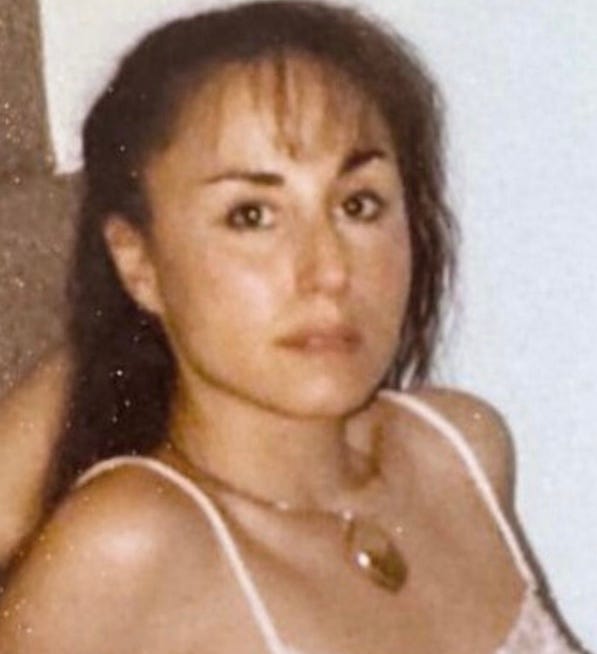
Louise was a force. She had impeccable taste and lush dark hair - she looked kind of like a Moonstruck-era Cher. She’d made a career on Wall Street in the seventies and eighties in a male-dominated field despite never having gone to college. She also was hilarious. My dad used to say she was one of the funniest people he knew, which is saying something considering he was a lot of other people’s nominee for funniest person.
But she had a notable tendency that I think probably annoyed people even if they loved her: she had strong ideas about how people could more like the better versions of themselves she concocted in her imagination.
For instance, she was always on my dad’s case about how he should wear nicer clothes. Or at least… recently laundered clothes. She liked to tell the story about the time I was four and whispered to her that sometimes, when I walked behind him, I could see his bare butt through a small hole in his jeans.
However, from an early age, I knew that this wasn’t my dad’s problem, per se. It was just part of who he was. If he changed in all the ways she wanted, he’d be a different person. That person might have been a better model for her needs, but it wouldn’t be the dad I loved. How boring the world would be if it weren’t filled with both people who wear Brooks Brothers slacks and people with holes in the seat of their Levi’s!
Is it that you can’t or that you don’t want to?
Louise had her thoughts about my sartorial choices, too. Nevertheless, she was president of my fan club and was always enthusiastic about my successes and full of ideas about how to bring whatever I was doing to the next level. However, she desperately wanted me to be a more calculating person.
Example: The summer after high school I got a job at a tony Manhattan health club. When I told her that Jerry Seinfeld was among its members, Louise came up with an elaborate plan for how I could seduce him. She told me I should figure out what time he went to the gym, and then I should hang out by the water fountain during those hours. I thought this was…hilarious. She had to be joking. I couldn’t imagine being so plotting— I would never be able to pull off such a scheme with a straight face! With a few decades of perspective I see that she was totally serious. And wouldn’t you know: Seinfeld met his current wife that August: a pretty brown-haired New York-born Jewish girl who happened to end up behind him at a water fountain… you’ll never guess where.

I’ve thought a lot about this since the demise of my business— specifically about how I wish I’d plotted my chess moves more carefully with Melissa and Mr. Sends-Emails-While-Pooping. At the very least, I should’ve taken some kind of promise money when they gave me their letter of intent. And I surely could’ve entertained other offers without them knowing. It’s not that I didn’t want to. It’s that I couldn’t have. It would’ve felt duplicitous in a way that just feels… totally not me.
I’ve also thought a lot about the fine line between “I don’t want to” and “I can’t.” This was highlighted for me by a business advisor I worked with briefly who was trying to coach me through how to lead a staff meeting— a seriously uncrazy thing to do when you run a small business. It doesn’t seem like it should be so hard but… I told her I couldn’t do it. “Is it that you can’t or you don’t want to?” she asked.
I thought hard about this. I know what “I don’t want to” feels like, workwise. There have been many times I’ve had a writing assignment where I’ve stared at the blinking cursor on the blank page and wished, with every fiber of my being, that I could just this one time use a Get Out Of Jail Free card. I think every writer knows this feeling. To some degree, it’s part of the process. But you push though. Or at least I push through. Maybe some people can’t. Probably many people can’t. I don’t want to do it, but I can.
Then I thought about, say, spanking my child. It’s not illegal; in fact, according to plenty of people I know, it’s sometimes imperative. Would I want to do that? No! But could I? Could I drape my daughter over my lap, lift my hand up and bring it down on her behind with force? I control how my hand behaves and I could certainly wrestle her into the position but, I…just couldn’t. I can’t.
Could I muscle my way through a staff meeting agenda, send a Google calendar reminder, open Zoom and get thorough a script, with me reading the role of boss? You’d think! But I didn’t want to, to the point of not being able to. I couldn’t stand the contrivance of it. Frankly, when I started a small business, if I’d known how many parts of my work life would fall into that funny zone between can’t and don’t want to, I probably would’ve stopped before I started. I thought I was just going to train dogs!
Looking back, though, it’s hard to say when I should’ve hit the brakes, or how I could’ve gotten off at an earlier exit. Maybe things would’ve gone differently if I’d started out with a truly equal partner — someone who could’ve shared the risk, someone who actually knew how to do the things I had to learn mid‑air, someone who didn’t seem to so often turn into a speed bump when I was running on empty and just trying to make it to a gas station.
But if I’d gone hunting for the perfect Thelma to my Louise, I may never have left the driveway, and that would’ve been too bad. I think the business was a net positive in the world even if it ultimately ended on the wrong side of a cliff. Relationships often don’t end the way we want. And sometimes you really do need to just … dare to be lousy.
The Dolphin Trainer
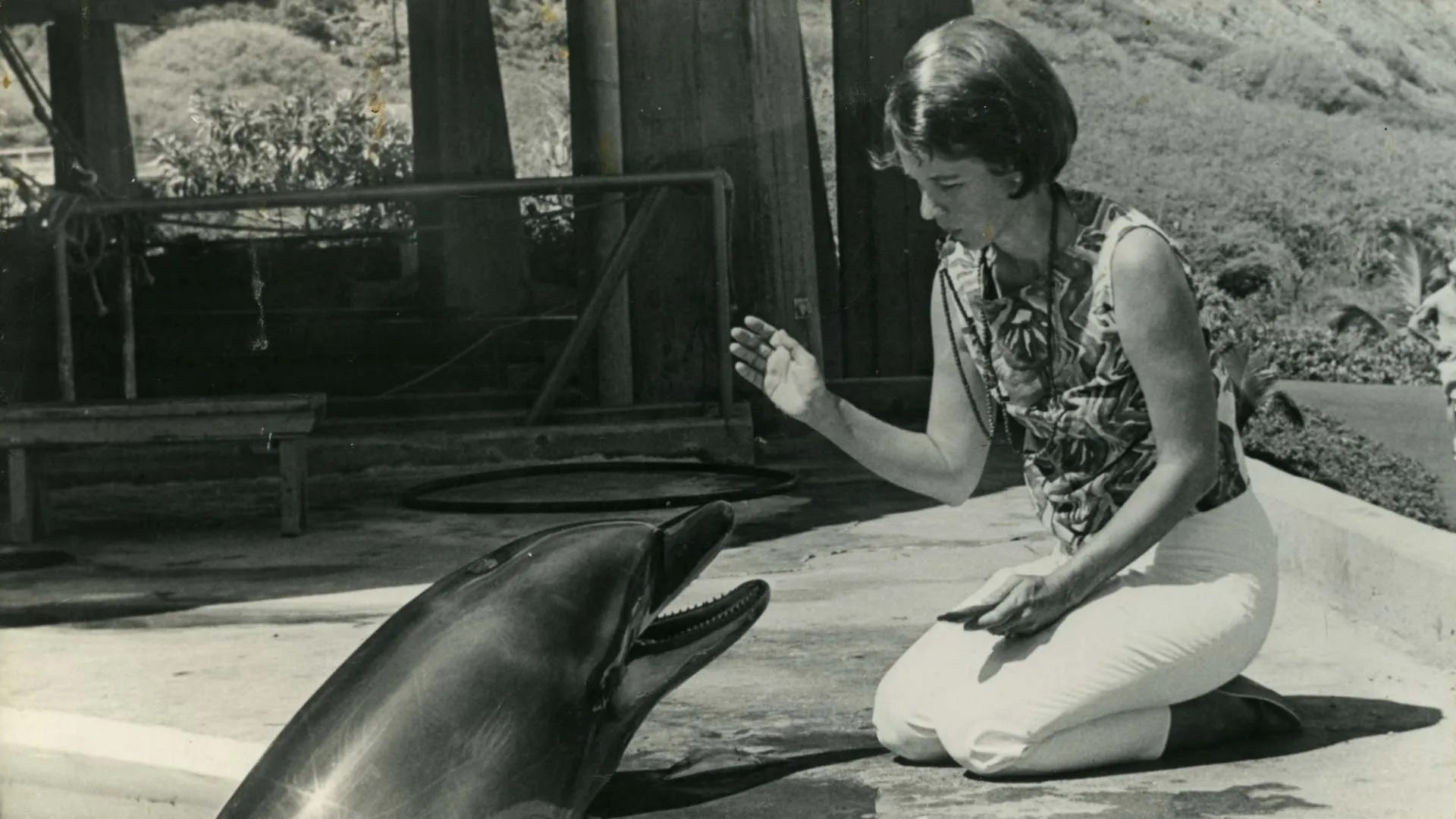
The other person who died in the first days of January last year was Karen Pryor. Karen was the person who started the Karen Pryor Academy of Animal Behavior and Conservation, which is the six-month vocational program that got me obsessed with dog training and the applications of the science of behavior — a science I previously hadn’t even known existed. I met her for the first time shortly after I graduated her program, and she signed one of her books for me. “Your name and my name are both on this page now,” she said. “And one day, maybe that will be a very exciting thing for other people to see!”
Little did I know that one day Karen would be in a book by me.
Somehow I have gotten this far into this mini-memoir without mentioning that, during all the craziness that I’ve documented thus far, I was writing a book about how to train dogs, and how to use animal training as a way to understand the science and philosophy of behaviorism.
I spent a decade mostly writing it in my head, sold it to a publisher in 2021, then sat down and banged it all out during a handful of sleepless weeks late in 2022. How To Train Your Dog With Love + Science was published four months before I had to close School For The Dogs. I might have more seriously considered closing the business a year or two earlier, given how much I was struggling, but I knew the book was coming out, and so much of it was about the business, that I thought one might help the other. I really wanted them to overlap in the world for at least some period of time.
What I wrote isn’t just a “how to” book: it’s a book full of stories of real people, many of whom were integral to the development of the technologies we use today to train dogs. One of the main characters of that story is Karen.
In the 1960s, she was married to a man who bought a marine park in Hawaii, and he asked her to put together a dolphin show for the park’s grand opening. Karen knew nothing about training or dolphins, but she gotten her hands on a pamphlet written by someone who had studied at Harvard in the lab of the psychology professor BF Skinner, and she used the techniques described therein to choreograph a synchronized-swimming dolphin spectacle — the first of its kind.
This learning experience inspired her to write a book to help people use techniques rooted in positive reinforcement to train, well, people: It came out in 1983 and was called Don’t Shoot The Dog! which is a little confusing because it’s not at all about dogs. But she did soon then turn her attention to dogs. In the early 1990s, she did a tour of dog training facilities around the country to try to get leaders in the field interested in using positive reinforcement techniques and tools, such as a handheld clicker, and to forgo using coercion and punishment.
I don’t think anyone has done more to bring the science of behavior out of the lab and into people’s living rooms than Karen Pryor. And the fact that she did it by meeting people exactly where they were—usually just wanting their dogs to stop pulling on leash—is, to me, absolute genius. While I was writing my book, I thought about her constantly. Like her, I came up through animal training. Like her, I was, above all else, a writer. And like her, what ultimately fascinated me wasn’t just training animals, but helping people experience the magic, depth, and unexpected humanity that animal training reveals about our own lives. It’s not something people say out loud much anymore, but it’s true: I wanted to be a Karen.
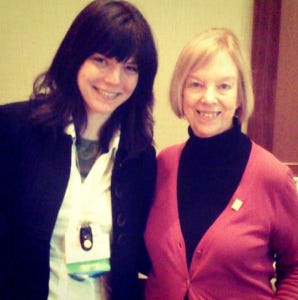
A few days after she died, I was catching up with Penelope Green, a New York Times journalist whose daughter I babysat in college. I mentioned the irony of Karen Pryor dying right at the moment I had to close the business, considering the business wouldn’t have come to be if not for her.
“Karen who?” she said.
It was a reminder that every field has its rock idols, and most of them could walk through Times Square completely unnoticed. Maybe that’s why I love obituaries. They’re like tiny maps of secret fandoms.
Well, you’ll never guess which section of The Times Penelope was writing for!
A few weeks later, an obit appeared in The Times, and it included a quote from me. Me! In Karen Pryor’s obit! Our names, on the same page, is as exciting as she predicted it would be— at least for me.
What a perfect bookend to this section of my life.
I looooove postscript 8 and 9! Annie, you are such a talented writer. I was just going to glance at it and read it tomorrow, but it's so engaging I couldn't stop reading.