If You Have a Smartphone… Woof
The science that trains dogs is also keeping humans scrolling

“Nearly all modern techniques of social conditioning were first established with animal experiments.” — John Berger, Why Look at Animals?
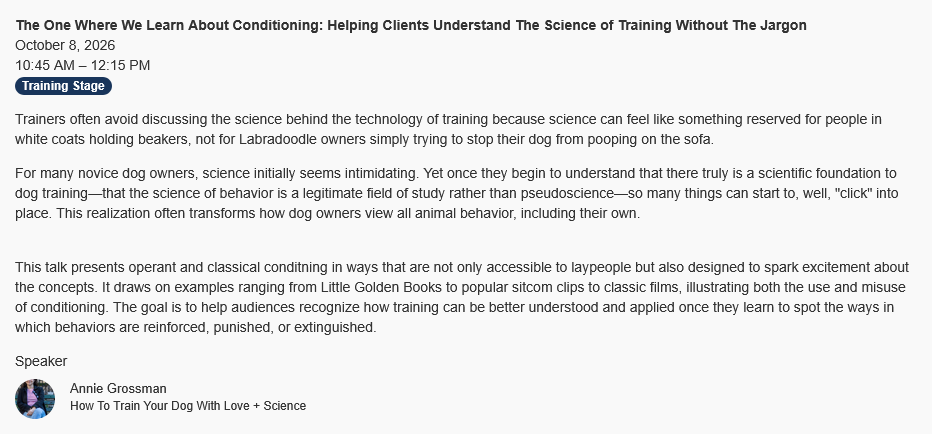
I’ve been hard at work on a presentation I’m going to be giving this October in Shaumburg, IL, at the Canis Conference.
My talk is about how to communicate the basics of the science of behavior to dog owners without using jargon — and why it can be a good idea to do so.
I’ve been having a ton of fun putting it together, mostly because it includes a lot of clips from Friends and Seinfeld and Cheers. (I may or may not have conceptualized the whole talk based on my goal of making my husband watch the kids on weekends so that I can watch old sitcoms.)

Positive(👍) or Positive(+)?
One thing I’ve been thinking about a lot as I put together this talk is the way in which “positive” as is used colloquially to refer to anything that is good, and how it used like dog-trainer-behavior-nerds, who use it to refer to the addition of something.
“Reinforcement” is also a confusing term because it sounds inherently nice. Bu, in the context of behavior science, reinforcement just means that a behavior is encouraged.
So, positive reinforcement seems, to your average non-behavior-nerd type, like a cake on top of a sundae.
But actually, it isn’t inherently kind.
It’s just effective at encouraging the likelihood of a behavior’s recurrence because of a consequence that results in the addition of something.
So while I’m a big fan of using positive reinforcement when I train dogs, I don’t think there is anything about positive reinforcement that is inherently “good.”
I’ve also encountered the misconception that positive reinforcement means rewarding “good” behavior. But behaviors can be positively reinforced regardless of whether they’re good, healthy, ethical, or useful.
You - yes YOU! - may right this moment be engaging in behaviors that are being positively reinforced even though the behaviors are not positive in the colloquial sense of the word.
Who’s Training Whom?
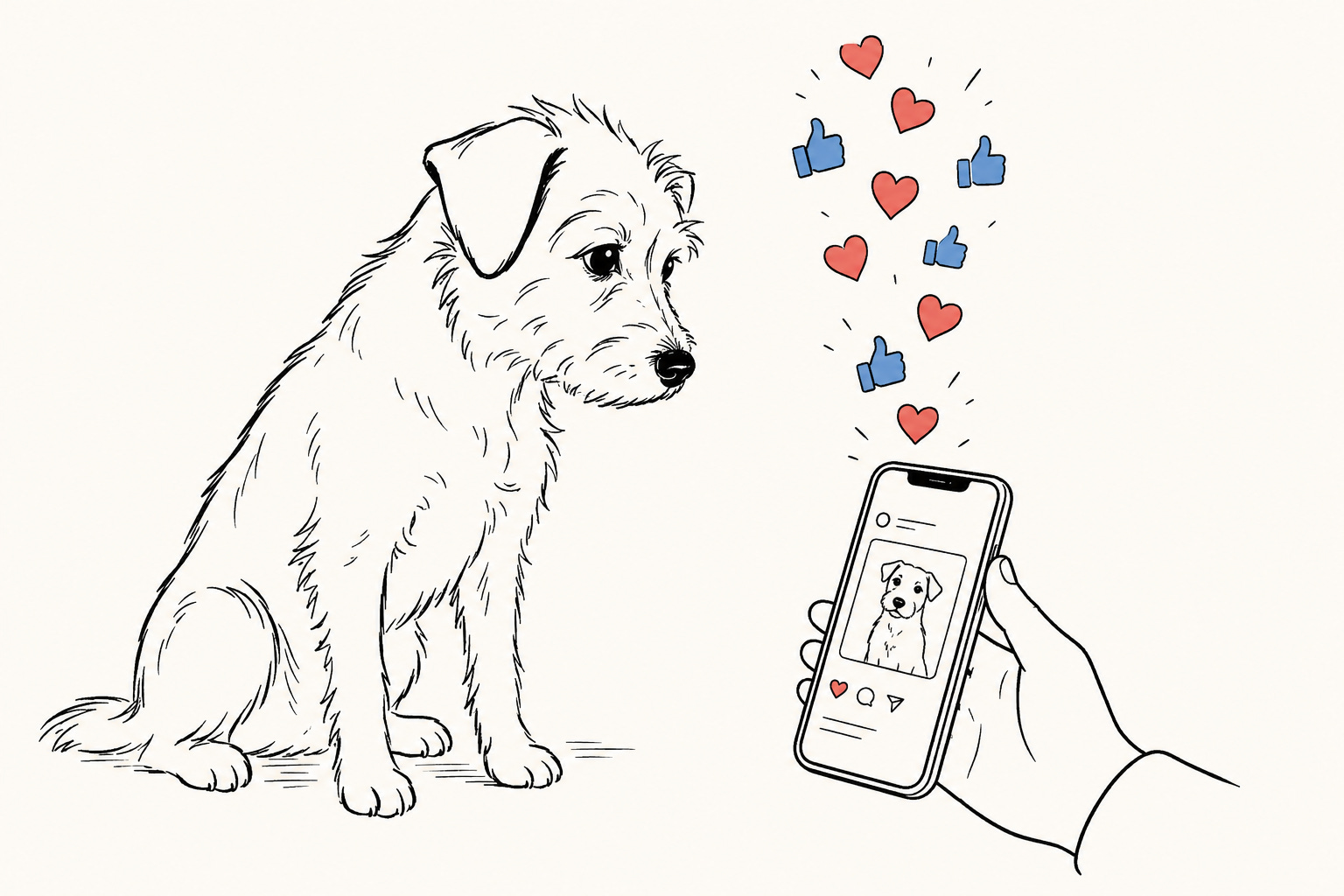
Here is a question that a trainer might ask a dog: “How do we consume as much of your time and conscious attention as possible?”
This question was posed in an interview with Axios in 2017. But it wasn’t a trainer asking this question. It was Sean Parker, a founder of Facebook.
The answer is not something you can really find on a screen: It’s the feel-good neurotransmitter your brain has been conditioned to produce when someone you may never have met gives you some degree of attention in the form of a tiny heart or thumbs up made up of a few pixels.
These meaningless digital tokens — which are not even easily traced to some kind of tangible primary reinforcer — are enough to keep us scrolling and refreshing, rewarding us for ancillary passive behaviors we’ve been trained to do.
Says Parker:
“How do we consume as much of your time and conscious attention as possible?We need to give you a little dopamine hit every once in a while because someone liked or commented on a photo or a post or whatever; and that’s going to get you to contribute more content and that going to get you more likes and comments. It’s a social validation feedback loop. It’s exactly the kind of thing that a hacker like myself would come up with because you’re exploiting a vulnerability in human psychology. The inventors, the creators… understood this consciously. and We did it anyway.”
In the film The Social Dilemma, Tristan Harris of the Center for Humane Technology breaks down the power of intermittent reinforcement and its role in getting people addicted to screens.
In our lives with our dogs, we are the Sean Parkers. If we’re “exploiting a vulnerability” in canine psychology, let’s do it in such a way that makes us the kind of benevolent force we wish Facebook were.
I hope that this talk, although meant to help dog trainers help their clients help their dogs, might also help more people better understand how technologies rooted in the science of behavior impact us, for better or worse, all the time, in ways that aren’t always, well, positive.
You can learn more about the Canis Conference here!
Here’s their blurb about my talk:
PS: I will be signing copies of How To Train Your Dog With Love + Science at The Coney Island Book Fair this weekend. If you’re going, come by and say “Hi!”