

A quick thank you to everyone who has joined me on Substack in the last few months! This Substack is free, but more than twenty of you have signed on to support my work by paying for a subscription, and I’m so grateful! Between now and the end of this month, you can subscribe for only $15/year AND I’ll send you a copy of my book as a thank you.
Today’s topic is a divisive one: Buying a dog. Would you? Have you? I’m curious to hear where others stand on this topic. Drop a comment below and let me know.
I’m periodically using this space to answer subscribers’ questions. Have a dog training question for Annie? Submit it here!

Hi Annie,
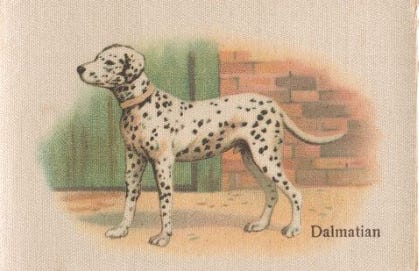
I’ve been looking into getting a Dalmatian, but I have a few friends who have been judgmental about it. They think choosing a purebred is unethical and have told me that if I’m not adopting, I don’t deserve to have a dog. I feel confident that a Dalmatian is the right breed for me, but I struggle with confrontation and never know how to reply when people say things like, ‘There are so many dogs in shelters who need homes.’ Are they right? Am I being terrible? And do you have any suggestions on how I can handle these comments?
Jessica
Hi Jessica,
I think it’s really commendable that you’re giving this choice so much thought. At the end of the day, the dog you end up with doesn’t know if money exchanged hands. But it’s true that, like eating meat or recycling, the choice you make is part of a bigger picture that has implications that elicit lots of opinions.
If you’re looking to avoid confrontation, then maybe… don’t get a dog? Ha. I say this as someone who has spent many hours butting heads with people on issues relating to dog ownership. My personal soapbox is about avoiding punishment and force in training whenever it’s possible (and it usually is). However, the “adopt, don’t shop” conversation can get heated just as fast. Indeed, the only bumper sticker I have stronger opinions about is probably “Who rescued who.” (It’s whom, people! Whom!)

For some dog lovers, the issue of where to get a dog has become less of a discussion and more of a moral litmus test. But, as I see it, there are really a lot of gray areas. For what it’s worth, I know plenty of people who work in rescue who often suggest that someone go to a good breeder—and I know breeders who tell potential clients to check their local shelters first. At the end of the day, I believe that responsible breeders, responsible adopters, responsible owners and good dog trainers all play a role in keeping dogs out of shelters. The dog world gets in trouble when it pretends only one of those things matters.
Here are some things to keep in mind:
Preventing shelter overpopulation starts at home. The most important thing any dog owner can do is make sure their own dog never contributes to the problem. This means that, unless you are willing to provide a home to any and all of your dog’s future puppies (and their puppies and their puppies), you should spay or neuter your own dog.
Work with a breeder who puts the dog’s well-being first. When choosing a breeder, make sure to select one who:
Is working to improve the breed, not just to sell puppies. Part of this means that they are conducting comprehensive health screenings, including genetic testing. For Dalmatians, that could mean participation in the DNA Bank Repository and registering the dogs with CHIC (Canine Health Information Center). A dog who has been tested by CHIC will get a CHIC number which you can use to verify that the breeder has done testing for common issues in the breed.
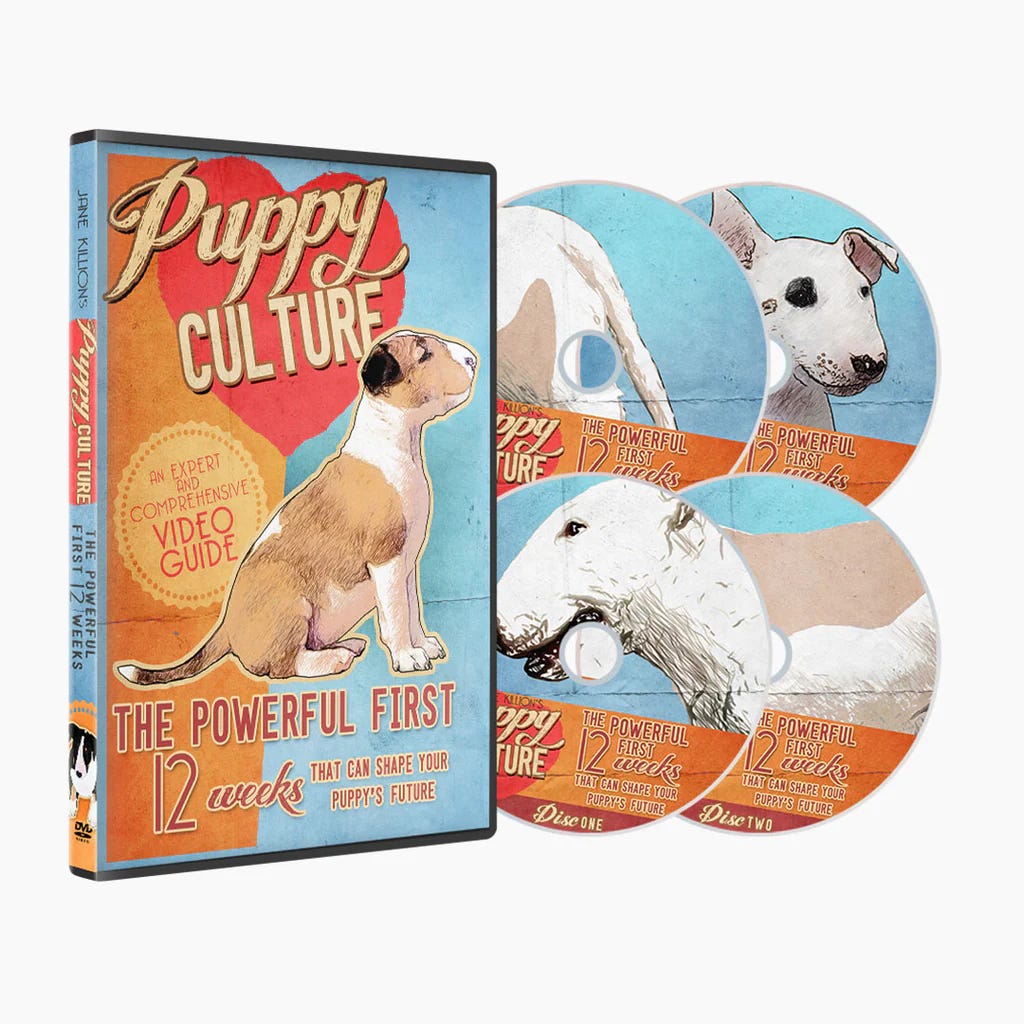
Invests in early socialization. A good breeder should also have a thoughtful socialization program for their puppies before they go home; many follow structured early-learning programs like Puppy Culture. You also want to ask about what they do to try to match puppies to the right type of home. Ideally, they should be interviewing you as much as you’re interviewing them asking you questions to make sure the puppy you’re getting is going to be a good fit for your lifestyle.
Offers a lifetime return policy. Responsible breeders take their dogs back if something goes wrong with the dog or you simply cannot provide a good home for them any longer, for any reason. They should be as invested as you are in the lifelong happiness and health of the dog you are getting. This is, again, one reason why getting a good purebred dog can impact the shelter population.
Explore retired adults. Breeders often need to rehome retired show or breeding dogs. Choosing an adult Dalmatian that has been bred and raised by a reputable breeder can be a great alternative—and a step closer to a rescue scenario.
Check breed-specific rescues. Many purebreds have dedicated rescue networks. For Dalmatians, you might look at DalmatianRescue.com or DalPal.com.
Support shelters in other ways. If you’re worried about public perception, consider donating to a local shelter or asking your vet if you can sponsor a spay/neuter procedure for a client in need, in parallel with bringing your Dalmatian home. You can also call also reach out to a local trainer and tell them that, if they’re approached by a dog adopter who is struggling with behavior issues that are leading them to consider relinquishing the dog to a shelter, you will sponsor a few sessions. I’m also a big believer that better access to good dog training could keep many dogs out of shelters. (I’m actually a cofounder of Petcademy, a program designed to help new adopters navigate common training and behavior issues so they can keep their pets.)
Hope these suggestions help. I also highly recommend Kim Kavin’s The Dog Merchants, a book that offers an exhaustive look at both breeding and rescue practices and will give you some useful talking points. One surprising detail from the book: there is a cottage industry of individuals and organizations who attend commercial dog auctions, buy purebred puppies from puppy mills and breeders, and then pass them off as rescues. They justify this by saying the dogs have been “rescued” from the commercial breeding industry—but of course, the money they pay still ends up supporting that industry.
In other words, being a thoughtful dog owner—whether you adopt or buy—is harder than either side of the debate likes to admit. Ideally, one day our shelters will be empty. If that ever happens, perhaps the conversation will shift toward making sure dogs are bred responsibly, and towards helping future owners understand what that actually looks like.
I’m curious where readers land on this question. If you’ve gotten a dog recently, did you adopt or go through a breeder—and what tipped the scales for you? (Bonus points if you’ve ever been scolded about it at a dinner party.)
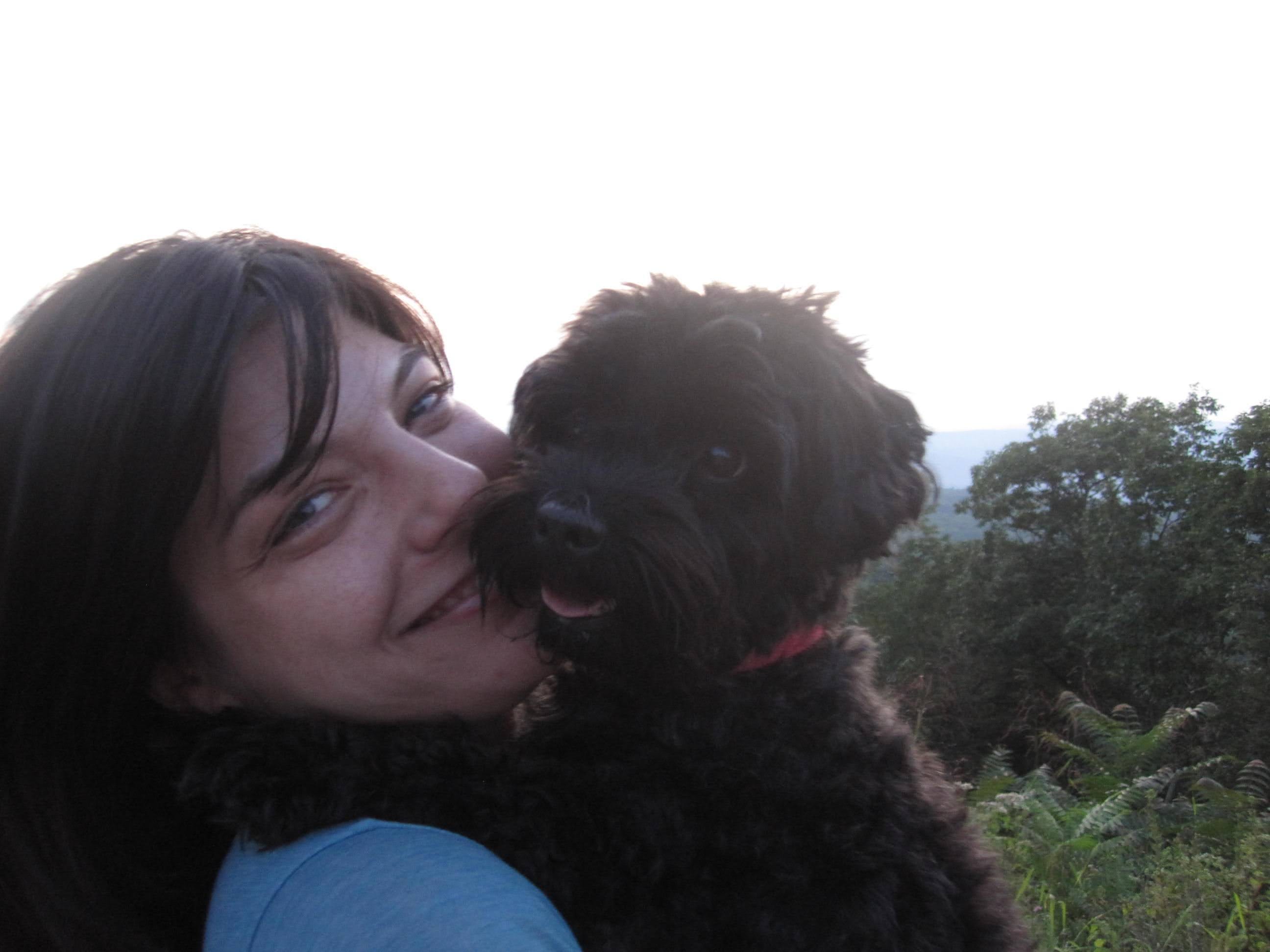
I’ll go first: I got my last dog, Amos, a Yorkiepoo at a pet store in Woodstock, NY. This was more than twenty years ago and I wasn’t as informed as I am now. (New York state banned the sale of dogs at pet stores in 2024).
Do I regret that I did that I purchased him at a store?
Well, yes and no.
Do I think that I played a small part in helping to support a poorly regulated industry that isn’t usually looking out for the dogs’ best interests"? Yes. I went through a period where I had nightmares about a dog (in my dream it was his mother) being kept in a small cage for her whole life, forced to have puppies who were then shipped off like cargo at their most vulnerable time in life.
I even spent a few days once trying to figure out exactly where he had come from in the hopes that I could find his mother and make sure she was okay (I didn’t really get anywhere). But… I loved him and we had a great time together for fifteen years.
So, would I redo it all in order to have gotten a dog through a more ethical transaction? When time travel actually becomes possible, I’ll let you know.
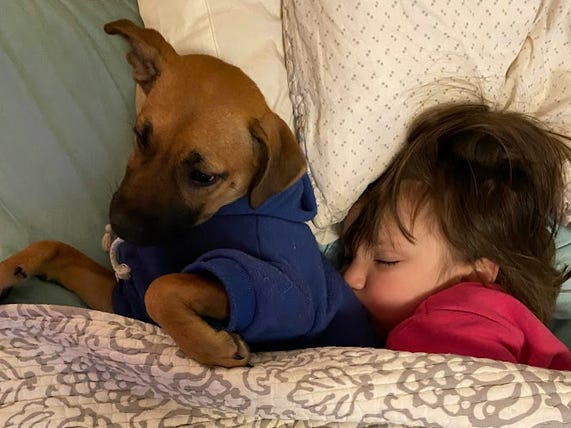
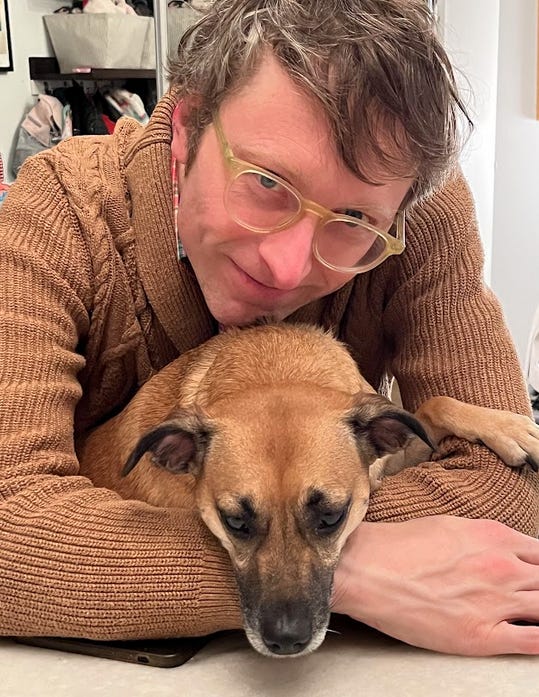
Poppy, my current dog, came from the excellent local group Waggytail Rescue, was brought to Manhattan from an Alabama shelter along with her two sisters. She has proven to be a really good fit for our family: She’s pretty low maintenance (which, in my busy household, I appreciate) and she loves to snuggle, which is convenient as it is also my three kids’ favorite activity.
I few months after we lost Amos, I got on to the Waggytail waiting list — a good tip, if you’re looking for a dog, is to fill out an application even if there isn’t one in particular that you’re looking to adopt, because that way you’re more likely to be matched when one that fits your criteria is available. However, at the same time, I was corresponding with two breeders that I felt were excellent. I was interviewing them pretty seriously, and they were interviewing me too, which is how it should be. It was during COVID, however, and the prices they were asking were double their normal prices. I think breeders tend to not make a lot of money, as it costs a lot to breed a dog and raise the puppies properly. So, while I was up to spending a lot, I was hesitant to spend two times what I thought “a lot” would be.
I don’t regret not getting a dog from them, since I wound up with a dog I love, although sometimes I think it might’ve been good if we’d gotten a smaller dog (I was looking at a Miniature Poodle and a Norwich Terrier) because we travel in the summer for my husband’s work and it would’ve made it easier to bring the dog with us.
However, now that I have three kids to deal with on planes, I’m really okay leaving her home. I’m especially okay since, when we travel, she usually gets to stay with my friend Alex, who loves her as much as she loves him.
It leads me to wonder…Who’s sitting whom?!
Featured Image: George Arents Collection, The New York Public Library. "Dalmatian." The New York Public Library Digital Collections. 1850 - 1959.
(This email may contain Amazon affiliate links)
“Indeed, the only bumper sticker I have stronger opinions about is probably “Who rescued who.” (It’s whom, people! Whom!)”
Annie you are just the best!
Wow, this is such a loaded topic and question. I'll start by saying I love your reply. Agree with each and every one. At the end of the day, bringing a dog into your life is a really personal decision if Jessica wants to add a dalmatian to her family, then she shouldn't have to worry about being judged. That said, you've given her excellent avenues to consider and would say that if she didn't have her heart set on a puppy, that she could do just as much of a service by adopting from a purebreed rescue as a shelter. The sad reality is that many people who buy a dalmatian (or a german shepherd or a beagle or a miniature schnauzer, et al) and then realize they didn't do their due diligence on the breed, and then look for ways to "re-home" are not really cut out to own a dog at all. But, you, as a responsible prospective dog owner can be part of the solution by seeking these discarded dogs and giving them the loving home they deserve!!
I personally land right in the middle of this heated discussion. I work at an animal shelter, but on the training side and so my clients are dog owners. Today, I had a Portuguese water dog, a Norwich Terrier, two dachshunds and a pit/lab mix. They all deserve the great lives they have, and their owners are investing in their well-being by continuing training so that they will be the best dogs they can be.
Me personally? In 1990, my then fiance and I bought a miniature schnauzer from the store my cousin worked at, and I'd be surprised if he wasn't from a puppy mill. We had 17 wonderful years with him and I don't regret it at all. As he was in his final year, I was out of a job, so I wanted to have not one but two puppies. Schnauzers again. Researched breeders and we selected one that said they breed for temperament. It sounded great as we wanted good temperament, but in hind sight, we had no idea what that meant. We purchased brothers (learning after the fact that that was not a good idea), but again, I wouldn't change anything. We got 11 and 12 years from them - too short in my opinion, but you deal with what life hands you. When my boys were 8, we had a big life change and moved from Atlanta to NJ. This also was the end of my corporate career, and so I started volunteering as a dog walker at an animal shelter. That opened my eyes to the plight of so many dogs who, to no fault of their own, found themselves in a shelter. They deserved a loving home too! So, my focus changed and in 2019 when we lost our second mini schnauzer, I was all in on rescuing. We adopted a mixed breed from the shelter I volunteered at. They partnered with a rescue in the south who would pull dogs from high kill shelters and bring them up north to find their homes. We love our girl and couldn't imagine life without her.
I understand things from both sides of the fence, and it is not my job to judge. I say do what is best for you in your life right now, and commit (I mean really commit - not just a few days or months, but for life) to set your dog up for success to live his or her best life ever! 🐾